
Turn Concern Into Effective Action
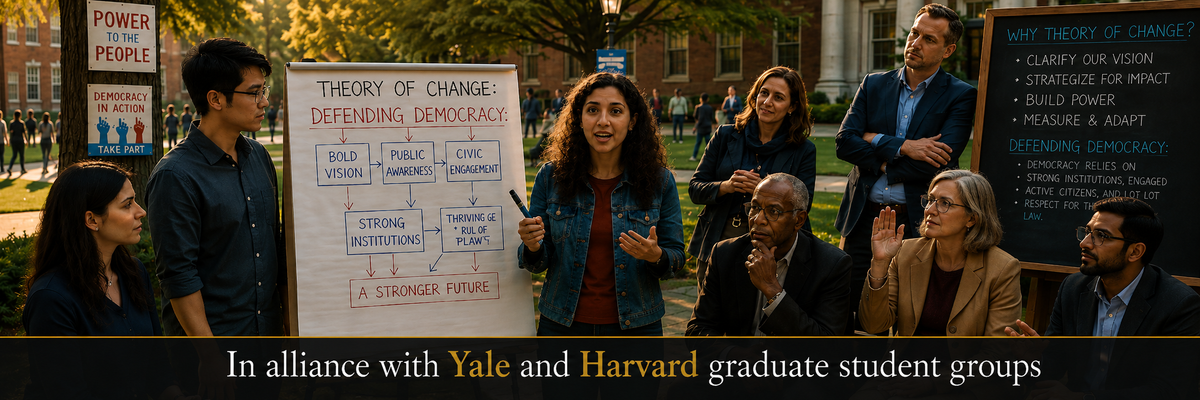
You care deeply. You may have experience, relationships, skills, or resources that could matter. The difficult question is knowing where to begin and what might be effective.
Action This Day brings concerned citizens together with experienced change-makers to explore practical strategies, identify real opportunities, and take wiser next steps.
Free on Zoom · Open to everyone · No expertise required
Upcoming Conversations
Wednesday, September 16, 12:00–1:30 PM Eastern — Understanding the Current State of Election Protection in the United States, with Justin Levitt. Learn what you can do for this the next election to protect freedom in America.
See our most recent meetings on Youtube:
Krasner/Dehghani-Tafti: What Can University Communities Do When Federal Power Goes Too Far? FAFO!
You Do Not Need a Finished Plan
You only need to be ready to look for a useful next step.
Many people understand that the country faces a serious crisis. Far fewer know how their own time, experience, relationships, professional knowledge, or financial resources could make a meaningful difference.
These conversations are designed to help close that gap.
How It Works
1. Choose a conversation
Begin with the subject, speaker, or problem that interests you.
2. Learn how change actually happens
Hear from people who have organized campaigns, moved institutions, enforced the law, built coalitions, and confronted powerful opposition.
3. Leave with a clearer next step
Identify an idea, relationship, resource, project, or opportunity worth pursuing.
More Than Another Panel
Many public events explain why people should be worried. That is important—but concern alone is not enough.
Our conversations focus on practical questions:
- Where is the leverage?
- Who has the power to act?
- What resources are already available?
- What could people in our networks build, support, fund, or accelerate?
- What is one realistic next step after the conversation?
The goal is not to offer a single grand solution. It is to help people develop better judgment, meet serious collaborators, and discover useful work they might otherwise never have found.
Who Should Attend?
These conversations are for people who:
- understand that democracy, freedom, and the rule of law face serious threats;
- do not want to remain worried spectators;
- want practical ideas rather than commentary alone;
- are willing to learn from people with real experience;
- and are looking for ways to contribute that fit their circumstances.
Students, alumni, faculty, professionals, organizers, lawyers, donors, public servants, and community members are welcome.
You do not need a university affiliation to participate.
You also do not need to be wealthy, prominent, politically connected, or already active in an organization.
What You May Leave With
Every conversation is designed to help you leave with at least one clearer idea about where your time, skills, relationships, or resources could matter.
That might include:
- a more realistic understanding of how change happens;
- a practical strategy or framework;
- a person or organization worth contacting;
- a project you could support;
- a skill or relationship you had not realized was valuable;
- or a next step that fits the time you actually have.
One conversation. One clearer opportunity to act.
Why University Communities?
University communities contain extraordinary concentrations of knowledge, credibility, institutional access, professional relationships, communications capacity, and financial resources.
Yet those resources are often fragmented. People who could accomplish important things may not know one another, may not recognize their collective power, or may not know where their help is most needed.
These conversations are intended to help turn scattered concern into informed cooperation.
Concern Without a Path Becomes Exhaustion
People can spend hours following alarming news without becoming any more capable of changing what happens next.
A better path is possible:
- understand the problem;
- find the leverage;
- meet people who can help;
- choose a practical role;
- and take one meaningful step.
No single conversation will solve the democratic crisis. But it may help you find the people, ideas, or opportunities that change what you do next.
Begin With One Conversation
You do not need to join an organization or make a major commitment.
Choose an upcoming conversation. Listen. Ask questions. Meet people. Decide whether the experience helps you become more useful.
Ready to Consider a Larger Role?
After attending a conversation, you may decide that you want to contribute more directly.
A free 25-minute Mission Fit Conversation can help you think through:
- what problems most concern you;
- what experience and relationships you already have;
- how much time you realistically want to contribute;
- and what forms of involvement might be both useful and meaningful.
This is not a pressure-filled recruitment call. It is a practical conversation about where you might fit.
Schedule a Mission Fit Conversation
The Invitation
This is a dangerous moment—but it may also be a moment when ordinary people discover that they are capable of more than they imagined.
You may be closer than you think to a person, institution, skill, or opportunity that could make a real difference.
Start with one conversation.