Guardrails: What Can University Communities Do When Federal Power Goes Too Far?
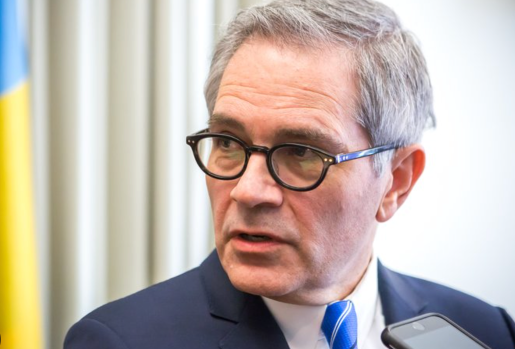
July 22, 1:00–2:30pm ET: Philadelphia District Attorney Larry Krasner on FAFO, democracy defense, and useful action
Get the zoom details here
A university community can be more than a place for discussion.
It can be a network of people with legal skill, public credibility, organizing talent, research capacity, alumni relationships, institutional access, communications reach, funding ability, and moral seriousness.
The question is: how can that power be used wisely when freedom, democracy, and the rule of law are under threat?
On Wednesday, July 22 from 1:00–2:30pm ET, Philadelphia District Attorney Larry Krasner will join us for a Zoom conversation on how university communities can support the work of Fight Against Federal Overreach, or FAFO.
The panel will also include:
-
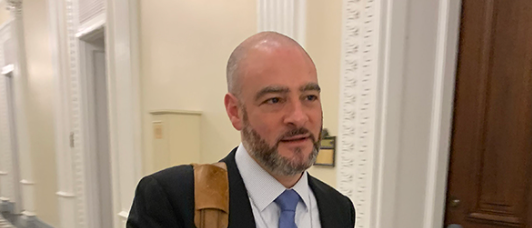
Hennepin County Attorney Mary Moriarty has launched a criminal case against a federal officer involved in the Minnesota immigration crackdown, which was part of a surge of forces into cities including Los Angeles, Chicago and New Orleans.
-
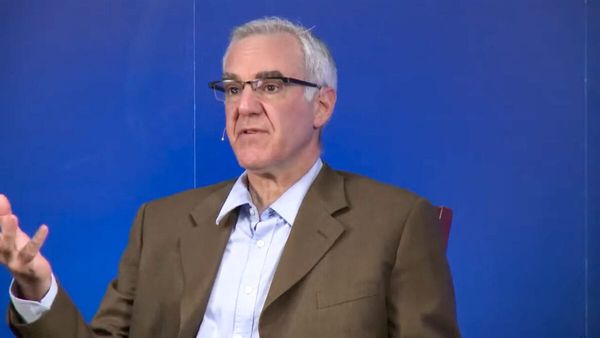
Parisa Dehghani-Tafti is the Commonwealth’s Attorney for Arlington County and the City of Falls Church. Parisa was first elected to a four-year term in November 2019, followed by being elected to her second consecutive term in 2023 where she will serve until 2027.
FAFO is a national coalition of District Attorneys working to ensure that federal officials are held accountable when they exceed their lawful authority. The coalition’s public message is simple and powerful:
No one is above the law.
That principle matters in ordinary times.
It matters even more when federal power may be used to intimidate, detain, coerce, silence, or interfere with democratic life.
Why this conversation matters
Many people in university communities are worried about authoritarianism, attacks on institutions, intimidation, political violence, and unlawful uses of government power.
But worry is not enough.
A university network becomes powerful only when people start asking sharper questions:
Who needs help?
Who already has a serious strategy?
What legal, technical, communications, research, organizing, or funding capacity could university communities bring?
What would actually help prosecutors, litigators, election defenders, civil-society groups, whistleblowers, public servants, students, faculty, alumni, and local communities protect freedom and the rule of law?
This conversation is an opportunity to learn directly from one of the public officials helping build a concrete accountability strategy.
What we hope to understand
This session will focus on practical questions:
What is FAFO trying to do?
What kinds of federal overreach are most dangerous?
What is the legal reality when federal agents violate state law?
What does the public need to understand before a crisis?
How can university communities help without pretending to be experts in things they do not understand?
What kinds of research, communications, organizing, legal support, technology, public education, student work, alumni outreach, or funding could actually be useful?
How can we help serious people do serious work?
The university-community challenge
University communities often contain resources they do not fully see.
One alum may know a prosecutor.
One law clinic may be able to help with research.
One professor may understand emergency powers, federalism, immigration enforcement, election law, whistleblower protection, or civil-military relations.
One student group may be able to organize a public briefing.
One donor may be able to fund a hotline, a legal-defense effort, a research project, or a communications campaign.
One retired public official may know who needs to be in the room.
One journalist, technologist, organizer, or civic leader may know how to turn scattered concern into useful action.
The point is not to assume that university communities should lead.
The point is to ask how they can serve.
Possible areas for support
We do not yet know what DA Krasner and his colleagues will judge most useful. That is one reason we are having the conversation.
Possible areas of support may include:
- public education about the rule of law and unlawful orders
- research on state and local accountability tools
- support for model legislation and prosecutorial precommitment letters
- help connecting legal experts, prosecutors, and university law communities
- communications work that helps people understand that “just following orders” is not a defense to unlawful conduct
- support for federal workers, service members, contractors, and others who refuse unlawful orders
- evidence collection, secure reporting, and technology infrastructure
- outreach through alumni associations, professional networks, fraternities and sororities, student organizations, faculty networks, and civic groups
- practical support for organizations already defending democracy and the rule of law
The goal is not to create another abstract panel.
The goal is to help people find useful next steps.
Who should attend
This conversation is for students, alumni, faculty, staff, and friends of university communities who want to help protect freedom, democracy, and the rule of law in practical ways.
It will be especially useful for people interested in:
- law and public accountability
- democracy defense
- civil rights and civil liberties
- election protection
- immigration enforcement and constitutional limits
- federalism and state-level action
- communications and public education
- technology for evidence collection and rapid response
- student and alumni organizing
- high-impact civic work
You do not need to arrive with a finished plan.
The point is to learn what serious people are already building — and how university communities might become more useful to them.
Register
This conversation is part of the broader Action This Day conversation series on how university communities can defend freedom, democracy, and the rule of law through practical, near-term action.
Please register for the series here.
And please share this page with people in your university networks who want to do more than worry.
Bring the people who can help.
Bring the people who know people.
Bring the people who are ready to turn concern into organized democratic power.
Get the zoom details here and reserve your seat!