Guardrails: How Do Serious Change-Makers Build a Theory of Change?
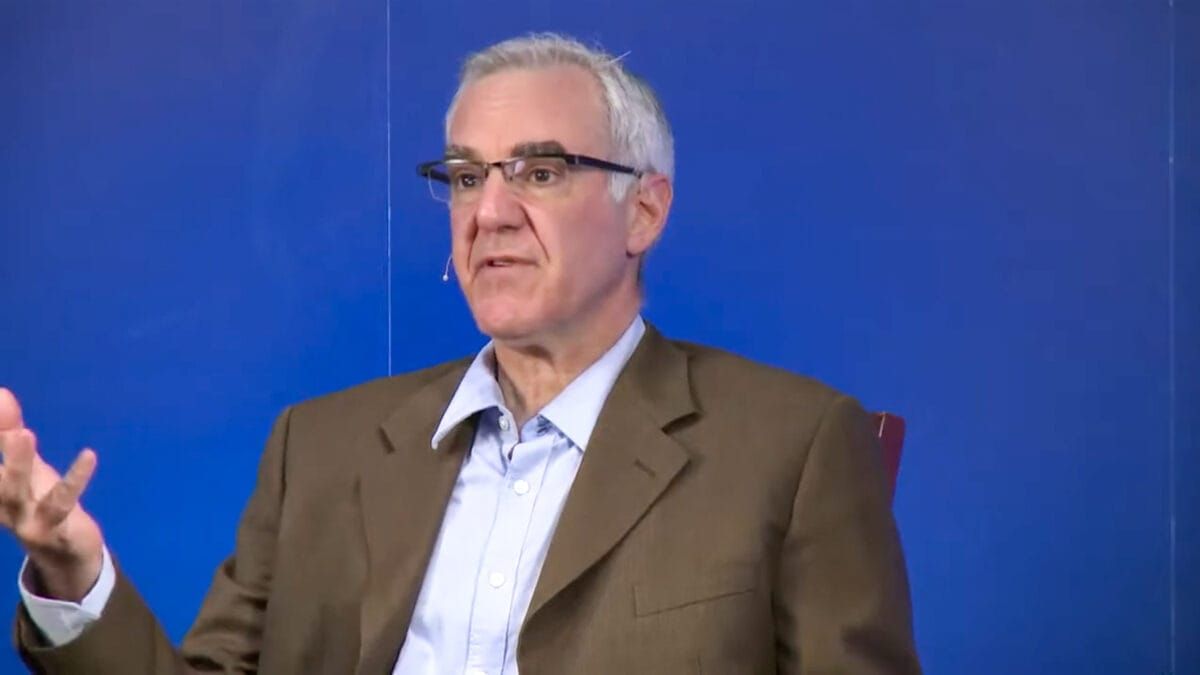
Thursday, September 3 noon to 1:30pm ET Andrew Behar of As You Sow on strategy, leverage, and university communities
Get the zoom details here and reserve your seat!
Tech support: info@actionthisday.net
Andrew Behar has spent years working to move powerful institutions without controlling them.
As CEO of As You Sow, he leads one of the country’s most important organizations using shareholder advocacy and engagement to push corporations on climate risk, toxins in the food system, ocean plastics, racial justice, wage equity, and other issues of material risk. His official bio describes As You Sow as the nation’s leading nonprofit practitioner of shareholder advocacy and engagement, with a 30-year track record of using shareholder power to compel companies to reduce risk.
That work begins with a deceptively simple question:
How does change actually happen?
On Thursday, July 16 from 2–3:30pm ET, Andrew Behar will join our university-community conversation series for a session on:
How Do I Think About Theories of Change?
This is not just a conversation about corporate accountability.
It is a conversation about strategic thinking.
A theory of change is the bridge between values and results.
It is the difference between saying, “This should happen,” and asking, “What would actually make this happen?”
It forces us to ask:
Who has the power to change the outcome?
What pressure do they respond to?
What incentives shape their choices?
Who can influence them?
What institutions matter?
What evidence would change the conversation?
What coalition could make the issue harder to ignore?
What sequence of action turns a good idea into a real campaign?
Those are the kinds of questions serious change-makers ask before they spend people’s time, money, attention, and hope.
Why Andrew Behar?
Andrew Behar’s work is fascinating because it is built around leverage.
As You Sow does not run the companies it seeks to influence. It does not command their boards. It does not own most of their shares. Yet it works through shareholders, disclosure, risk analysis, coalition-building, public pressure, and engagement with corporate leadership to move large institutions.
In a 2024 interview, Andrew described the moment when shareholder advocacy made sense to him: corporations are centers of power, and when a major corporation changes policy, the effects can ripple through workers, supply chains, customers, shareholders, and communities.
That is exactly the kind of thinking democracy defenders need.
Not because universities are corporations.
Not because every democracy problem is an investment problem.
But because university-connected people also need to ask:
Where is the leverage?
Who can move whom?
What institutions matter?
What pressure is legitimate, strategic, and effective?
What would make a powerful actor change course?
Universities may have hidden leverage — but leverage is not strategy
University communities are full of relationships, knowledge, credibility, and institutional connections.
But those assets do not automatically become power.
A theory of change asks us to connect assets to outcomes.
It asks whether our proposed actions actually reach the people or institutions whose choices matter.
It asks whether our tactics are symbolic, educational, relational, legal, financial, reputational, electoral, institutional, or some combination of these.
That matters because many democracy-defense ideas sound promising in the abstract.
State-level democracy defense.
Whistleblower and refuser support.
Medicaid defense.
Election protection.
Campaign funding.
Public education.
Institutional pressure.
Support for officials resisting unlawful power grabs.
All of these may be important.
But each requires a different theory of change.
For one idea, the key actor may be a state attorney general.
For another, it may be a prosecutor.
For another, it may be a legislature, a court, a donor network, a university president, a law clinic, a media outlet, a union, a professional association, or a group of people inside an institution who need outside support.
The question is not simply, “Is this a good idea?”
The question is:
How would this idea actually create change?
What we hope to discover together
This session is designed as a live inquiry.
We want to learn how Andrew Behar thinks about theories of change, and then explore how that mindset might apply to university communities trying to defend freedom, democracy, and the rule of law.
How do you know when you have found a real leverage point?
How do you tell the difference between a powerful story and a workable strategy?
How do you decide whether to engage quietly, escalate publicly, build a coalition, produce research, recruit allies, or change targets?
How do you keep a campaign focused enough to win while still connected to larger moral stakes?
How do you avoid wasting energy on actions that feel satisfying but do not move the system?
Those are not academic questions.
They are the questions that determine whether a university-connected democracy effort becomes a serious civic force or just another conversation.
Who should attend
This conversation is for people who want to become more strategic.
It will be especially useful for students, faculty, alumni, organizers, donors, lawyers, researchers, investors, business-school and law-school communities, public-interest professionals, civic leaders, and anyone trying to understand how university-connected networks can act more effectively.
You do not need to be an expert in shareholder advocacy.
You do not need to have a finished plan.
The point is to learn how a serious change-maker thinks about moving powerful institutions—and then ask what that teaches us about defending democracy now.
Sign up for the series
Andrew Behar’s conversation is part of a broader Action This Day conversation series on how university communities can defend freedom, democracy, and the rule of law through practical, near-term action.
Please sign up for the series here.
And please share the conversation series with people in your university networks who want to move beyond good intentions toward real theories of change.
Get the zoom details here and reserve your seat!