Guardrails: How Would Akili Organize University Communities?
June 10 at 3pm ET: Turning 40+ years of organizing experience toward democracy defense
University communities are amazing networks.
They contain relationships, credibility, knowledge, social trust, leadership capacity, and access to institutions that may be much more powerful than they look at first glance.
But a network is not the same thing as organized power.
A network becomes powerful only when people know how to organize it: how to recruit, how to train, how to listen, how to choose winnable campaigns, how to build leadership, how to keep people involved, and how to turn concern into disciplined action.
That is why we are so excited to host Akili on June 10 at 3pm ET for a conversation on:
How I Would Organize University Communities
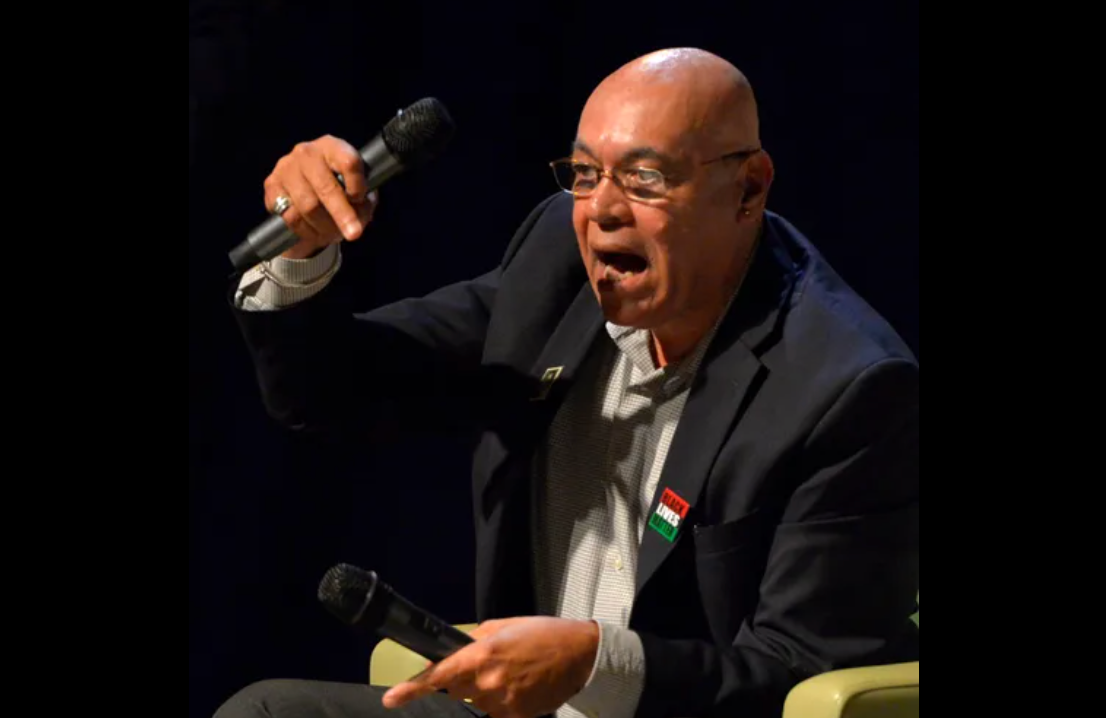
Akili brings decades of experience as a labor organizer, community organizer, political campaigner, trainer, and movement leader. Public profiles describe him as a longtime community, civil rights, and labor organizer; one profile says he is a senior advisor to the UCLA Black Worker Center and one of the leaders of Black Lives Matter Los Angeles. Another profile says Akili has more than 50 years of experience as a labor and community organizer and helped co-found the United Domestic Workers Union. A later event page also connects Baba Akili to the story of the birth of the United Domestic Workers of America.
This conversation begins with one practical question:
What can we learn from a man with 40+ years of organizing and organizer-training experience about how to use university connections to defend freedom, democracy, and the rule of law?
Organizers think differently
Many people in university communities are smart, committed, and worried about the country.
But intelligence and concern are not enough.
Organizers ask different questions.
They ask:
- Who has power?
- Who wants change badly enough to act?
- Who can move whom?
- Who has relationships that no one else in the room knows about yet?
- Who can recruit five more people?
- Who can train them?
- What campaign could actually be won?
- What would make volunteers come back next week?
- What would make a new person feel useful instead of overwhelmed?
- What is the next meeting?
- Who is responsible for follow-up?
Those questions matter because democracy defense cannot be only a mood, a slogan, or a collection of opinions. It has to become organized capacity.
What we hope to learn from Akili
This will not be a ceremonial lecture. It is meant to be a practical, fascinating conversation for people who want to act.
We hope to explore questions like:
How do organizers think differently?
What does an experienced organizer see when looking at a university-connected network?
Where are the hidden assets?
Where are the bottlenecks?
What mistakes do inexperienced people make when they try to “mobilize” people without building real organization?
How do you recruit, train, and retain volunteers?
Many people are willing to help for a week.
Far fewer become reliable, skilled, trusted participants in a campaign.
What does good training look like?
What keeps people involved?
What kinds of roles help people succeed instead of drifting away?
What does a good organizer do when someone wants to help but does not yet know how?
How do you pick winnable campaigns?
A university-connected democracy-defense network could work on many things: state-level democracy defense, support for FAFO, whistleblower and refuser support, Medicaid defense, election protection, campaign funding, public education, or preparation for moments of constitutional crisis.
But not every idea is equally strategic.
How should we decide where effort will actually matter?
How does an organizer choose a campaign that can build power, win something real, and leave people stronger for the next fight?
Why this matters now
Many people can feel that the country is under strain.
They can feel that democratic norms, the rule of law, and basic freedoms are not self-protecting.
But feeling the danger is not the same as knowing what to do.
That is where organizing wisdom matters.
Akili’s session is an invitation to think more seriously about how power is built. Not just how to express values, but how to organize people around them. Not just how to react to danger, but how to build the relationships, skills, and campaigns that make effective action possible.
Who should attend
This conversation is for people with university connections who want to become more useful in defending democracy.
That includes students, graduate students, faculty, staff, alumni, parents, donors, lawyers, organizers, writers, technologists, researchers, civic leaders, and anyone else who knows that scattered concern is not enough.
You do not need to already be an experienced organizer.
In fact, one of the reasons we are holding this conversation is that many people who care deeply about democracy have never been taught how organizing works.
If you have access to a university network and you want to help turn that network into constructive civic power, this conversation is for you.
Sign up for the series
Akili’s conversation is part of a broader Action This Day conversation series on how university communities can defend freedom, democracy, and the rule of law through practical, near-term action.
Please sign up for the series here.
And please share the conversation series with people in your own university networks who are ready to move from concern to organized action.