Can States Prosecute Federal Officials? A Legal Question Moves Toward the Center of the Democracy Debate
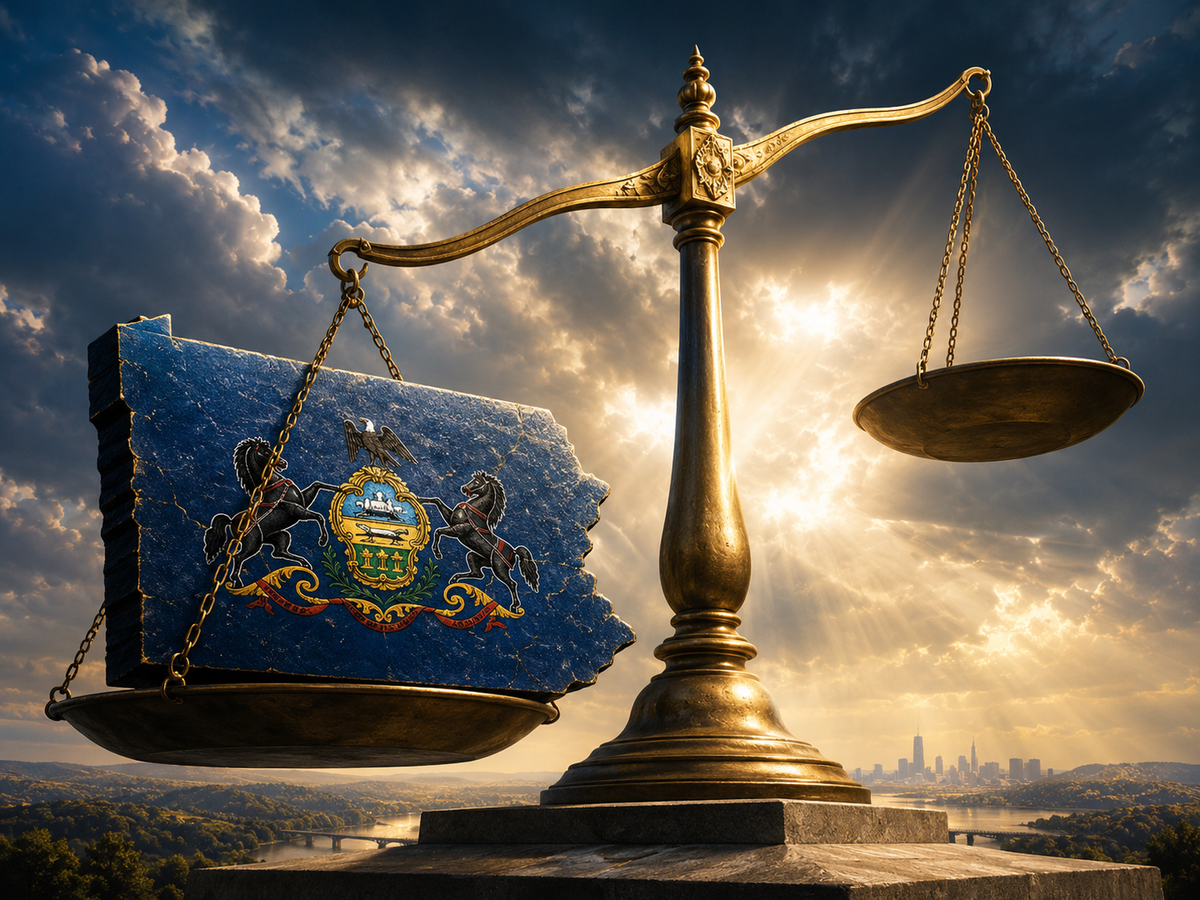
Excerpt: A University of Wisconsin legal report examines whether states can prosecute federal officials who break the law. As tensions between federal authority and local accountability rise, the question is no longer theoretical.
When federal power is exercised unlawfully, who—if anyone—can hold it accountable?
That question is no longer confined to law school classrooms.
A recent legal explainer from the University of Wisconsin’s State Democracy Research Initiative, authored by :contentReference[oaicite:0]{index=0}, takes a careful, nonpartisan look at a question that is quickly becoming central to the national conversation:
Can states prosecute federal officials for violating state law?
The answer, according to the report, is:
Yes—but only within important constitutional limits.
Who wrote this—and why now?
The report was written by Bryna Godar, a legal researcher at the University of Wisconsin Law School’s State Democracy Research Initiative, a center focused on federalism, democratic institutions, and state-level governance.
The timing is not accidental.
Godar notes that conflicts between federal and local officials have increased, particularly around issues like immigration enforcement and protest policing. These tensions raise real-world questions about what happens when:
- Federal agents operate within a state
- Local officials believe laws may have been violated
- And accountability mechanisms are unclear or contested
This report appears to be an effort to map the legal terrain before it is tested more aggressively in practice.
What does the report conclude?
The central conclusion is straightforward but nuanced:
States may prosecute federal officials for state crimes—but federal officials are protected when acting lawfully within their duties.
This protection comes from what courts call Supremacy Clause immunity.
In simplified terms:
- If a federal official is reasonably performing lawful federal duties, they are generally protected from state prosecution
- If they act outside those duties, or in a way that is egregious, unlawful, or unreasonable, that protection may not apply
The key legal arguments
Godar’s analysis highlights three major categories of state laws that could apply to federal officials:
1. Ordinary criminal laws
These include laws protecting people and property:
- Assault
- Trespass
- Homicide
- Unlawful detention
These laws apply to everyone, including federal officials—unless immunity applies.
2. State anticorruption laws
Some states have laws that explicitly apply to:
- Public officials broadly
- Or even federal officials specifically
Others may not—creating uneven coverage across the country.
3. State civil-rights crimes
Certain states criminalize violations of civil rights.
In some jurisdictions, these laws apply to any person acting under color of authority. In others, they apply only to state or local officials.
What happens if a case is filed?
Even when a state brings charges, the case may not stay in state court.
Federal officials can often remove the case to federal court under a statute known as 28 U.S.C. § 1442.
That means:
- A state prosecutor may file charges
- But a federal court may ultimately decide whether the prosecution can proceed
Has this analysis been reviewed?
The report itself is written as a legal explainer, not an advocacy document. It draws on existing case law and doctrine rather than proposing a new legal theory.
Its conclusions align broadly with mainstream legal scholarship on:
- The Supremacy Clause
- Federal officer immunity
- Federalism and state authority
While there is no single “peer review” document attached, the framework it describes is consistent with how courts and legal scholars have approached these issues.
If this analysis is right, what does it mean in practice?
This is where the report becomes more than academic.
If Godar’s analysis is correct, then:
Prosecutors
- May already have legal authority to bring certain cases
- But must carefully assess whether immunity applies
- And prepare for removal to federal court
Legislators
- May need to review gaps in state law
- Some states may lack statutes that clearly apply to federal officials
- Others may need clearer definitions or stronger civil-rights protections
At present, there does not appear to be a widely recognized, centralized effort to catalog these gaps across all 50 states.
That raises a practical question:
Should organizations like the :contentReference[oaicite:1]{index=1} or the :contentReference[oaicite:2]{index=2} undertake a systematic review of where state law may fall short?
The public
- Plays a role in understanding and recognizing when legal boundaries are crossed
- And in shaping expectations about accountability
What the report does not fully resolve
The report is careful—and that leaves important open questions.
It does not attempt to answer every edge case or strategic question that prosecutors, legislators, and scholars will face if this area of law becomes more active.
For example:
- It does not deeply explore conspiracy law as a tool for reaching coordinated misconduct
- It does not fully map how multi-state or hierarchical accountability might work
- It does not provide a playbook for legislative reform
Those questions may be the next phase of work—especially for legal scholars and university communities.
Questions for further research and public discussion
If this doctrine is going to matter in practice, several questions deserve careful attention:
-
Perjury and lawful duty:
If a federal official knowingly lies under oath in a proceeding within a state, can that be prosecuted under state law—or would immunity apply? -
Clear lines of illegality:
What specific types of conduct—assault, fabrication of evidence, coercion—are clearly outside Supremacy Clause protection? -
Conspiracy liability:
Can state conspiracy laws be used to reach coordinated misconduct by federal officials or their collaborators? -
Removal to federal court:
Does the ability to move cases into federal court effectively limit accountability in practice? -
Preventive design:
Can prosecutors select charges, and legislators draft laws, in ways that reduce the risk that immunity will block enforcement? -
Gaps in state law:
Which states lack statutes that clearly apply to federal officials—and who is cataloging those gaps? -
Role of universities:
Should law schools and research institutions be developing model statutes, legal analyses, or litigation strategies? -
Personal liability awareness:
Under what circumstances should a federal officer reasonably believe:
“If I do this, I could face state criminal charges”? -
Training and guidance:
Are federal agents adequately trained on the limits of their legal immunity? -
Higher-level accountability:
Could coordinated or policy-driven misconduct expose supervisors or decision-makers to liability? -
Juries and accountability:
Are there scenarios where state juries could become a meaningful accountability mechanism for federal misconduct?
Why this matters now
The report does not take sides. It does not call for prosecutions. It does not propose sweeping reforms.
What it does is more basic—and perhaps more important:
It clarifies that the law already contains a framework for thinking about accountability across levels of government.
Whether that framework is used—and how it is interpreted—will depend on prosecutors, courts, legislators, and the broader legal community.
And increasingly, it may also depend on whether institutions like universities choose to engage with these questions in a serious, sustained way.
Because if the boundaries of lawful authority are tested, they will not be defined only by theory.
They will be defined by what people are willing—and prepared—to do.