Why Civil Resistance Works: What Erica Chenoweth’s Research Can Teach Us About No Kings, Indivisible, and Today’s Democracy Movement
Excerpt: Protest is not just symbolic. Research on nonviolent civil resistance suggests that broad, disciplined, geographically dispersed movements can shift power in ways many people never considered.
Most Americans are taught that power lives in elections, courts, legislatures, and presidents.
Erica Chenoweth’s research asks us to look somewhere else too: at ordinary people, acting together, without violence, in numbers large enough and diverse enough to change what institutions believe is possible.
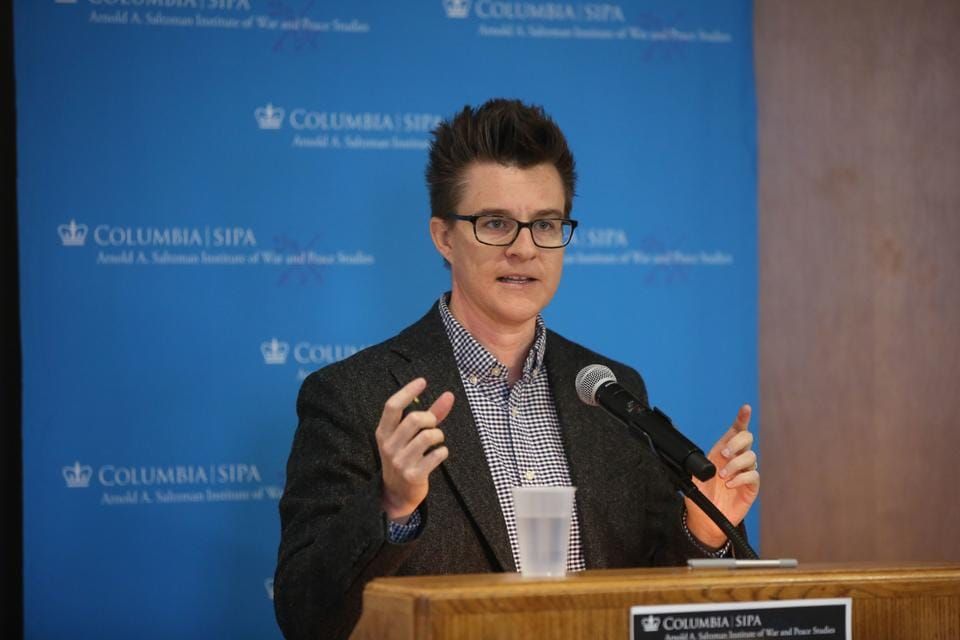
Chenoweth, a professor at the Harvard Kennedy School, is one of the world’s leading scholars of nonviolent civil resistance. Harvard Magazine describes her work as studying “nonviolent civil resistance against authoritarianism—where it has worked, where it hasn’t, and why.” She also directs Harvard’s Nonviolent Action Lab, which uses social-science research tools to study mass uprisings around the world. :contentReference[oaicite:0]{index=0}
The core finding associated with Chenoweth and Maria J. Stephan’s book Why Civil Resistance Works is startling: nonviolent campaigns have historically succeeded more often than violent ones. In one summary of their argument, the Belfer Center writes that nonviolent campaigns are more likely to win legitimacy, attract support, neutralize security forces, and trigger loyalty shifts among the opponent’s supporters. :contentReference[oaicite:1]{index=1}
That is the first surprise.
Nonviolence is not merely moral theater. It can be a strategy for power.
The “3.5% rule”—and why people misunderstand it
Chenoweth is widely known for the “3.5% rule”: the observation that no government in her dataset withstood a nonviolent campaign that mobilized at least 3.5% of the population at peak participation.
That phrase can be misunderstood. It is not magic. It is not a guarantee. It does not mean one march solves everything.
But it does suggest something important: movements do not need to persuade everyone before they matter. A committed minority, if large, disciplined, and sustained, can reshape political reality.
The Journal of Democracy reports that among 565 campaigns over the past 120 years, about 51% of nonviolent campaigns succeeded outright, compared with about 26% of violent campaigns. In other words, nonviolent resistance outperformed violence by roughly a 2-to-1 margin. :contentReference[oaicite:2]{index=2}
That is a very different way to think about protest.
Many people ask, “What did the protest accomplish today?”
Chenoweth’s research invites a better question:
What capacity did the protest build?
What this means for No Kings
The No Kings protests are worth viewing through this lens.
The first major No Kings demonstrations took place on June 14, 2025, alongside President Trump’s military parade in Washington, D.C. Organizers estimated millions participated across all 50 states, with large crowds in New York, Philadelphia, and many smaller communities. The Guardian reported that the protests were largely peaceful, though some later faced tear gas or were declared unlawful assemblies. :contentReference[oaicite:3]{index=3}
By October 2025, Harvard Kennedy School reported that new research from Chenoweth’s Nonviolent Action Lab found anti-Trump protests had become not only large and persistent, but also more geographically diverse than past protests, reaching into counties that voted for Trump. :contentReference[oaicite:4]{index=4}
That matters enormously.
A protest movement confined to a few liberal cities can be dismissed as predictable. A movement appearing in small towns, red counties, suburbs, campuses, churches, and union halls is harder to ignore.
The Guardian later quoted Chenoweth saying, “It is a very historic time,” because Americans were mobilizing where they live in ways she had not seen before in her lifetime. She also noted that protest was no longer confined to major cities or Washington, D.C.; instead, it was “very diffused” around the country. :contentReference[oaicite:5]{index=5}
That is one of the hidden powers of protest: it tells isolated people they are not alone.
Indivisible, 50501, and the move from protest to organizing
The question after a mass protest is always: what next?
Movements win not only by gathering crowds, but by turning crowds into networks.
That is why groups like Indivisible, 50501, Free DC, labor unions, immigrant-rights groups, and local democracy organizations matter. They convert outrage into lists, teams, trainings, pressure campaigns, mutual aid, election work, legal defense, and repeated public action.
The Washington Post described 50501 as a decentralized campaign that began on Reddit with the idea of “50 protests in 50 states on 1 day.” A spokesperson called it a “pro-democracy, pro-Constitution, anti-executive-overreach, nonviolent grassroots movement.” The same report noted that some events went beyond rallies, including food banks, neighborhood cleanups, and local actions aimed at sustaining organizing. :contentReference[oaicite:6]{index=6}
That is exactly the kind of evolution scholars of civil resistance watch for.
A one-day protest can express outrage.
A movement builds infrastructure.
Minneapolis and the anti-ICE flashpoint
The Minneapolis actions also fit this larger pattern.
The Guardian reported that after protests broke out following the killing of Renee Good during an ICE interaction in January 2026, coalitions rapidly organized a weekend of action with more than 1,000 participating protests. :contentReference[oaicite:7]{index=7}
This is where nonviolent discipline becomes critical.
Authoritarian-leaning governments often want protests to become chaotic. Violence can justify crackdowns, divide coalitions, and scare off people who might otherwise join. Chenoweth and Stephan’s research suggests that nonviolent discipline works in part because it lowers the barrier to participation. More people can join. Older people can join. Disabled people can join. Parents can bring children. Clergy, veterans, students, business owners, and public officials can participate without feeling they are joining an armed struggle.
That breadth is not cosmetic.
It is strategic.
Free DC: a live example of research shaping organizing
One striking example is Free DC.
The Washington Post reported that Free DC’s organizers explicitly drew from Why Civil Resistance Works. Keya Chatterjee, one of the co-founders, had read Chenoweth and Stephan’s work and translated the 3.5% idea into a local target: about 24,500 D.C. residents. Free DC officially launched during the weekend of Trump’s second inauguration, aiming to build a five-year campaign to defend the city’s values and autonomy. :contentReference[oaicite:8]{index=8}
That is what it looks like when research becomes organizing practice.
Not just “show up once.”
More like: build ward committees, train neighbors, lobby Congress, teach people how to film police, respond to ICE activity, and weave resistance into daily civic life.
One Free DC organizer put it bluntly: “2020 was checkers. We have to play chess with this government.” :contentReference[oaicite:9]{index=9}
Why protest works in ways people do not expect
Protest can look weak if you imagine power only as command.
But protest works through other channels:
- It reveals how many people dissent.
- It helps frightened people find each other.
- It recruits new participants.
- It trains people in public courage.
- It signals to judges, legislators, journalists, unions, universities, and civil servants that resistance has public backing.
- It raises the cost of repression.
- It can split elite coalitions.
- It can make unlawful orders harder to carry out.
- It can turn isolated anger into organized civic capacity.
That is why nonviolence scholars take protest seriously.
Not because every march wins.
Because movements are built through repeated action.
The university connection
University communities should pay close attention.
This is not just a topic for activists. It is a topic for law schools, political science departments, history departments, public policy schools, student groups, alumni networks, chaplaincies, unions, and local civic organizations.
Universities can help in at least four ways:
- Research: Track protests, repression, public opinion, legal outcomes, and movement strategy.
- Education: Host teach-ins on civil resistance, democratic backsliding, authoritarianism, and the rule of law.
- Training: Support nonviolent discipline, de-escalation, legal observing, digital security, and rights education.
- Connection: Link students, faculty, alumni, neighbors, unions, lawyers, faith leaders, and local officials.
This is not about turning universities into partisan campaign offices.
It is about recognizing that democracy is a field of study, a civic inheritance, and a practical skill.
The bottom line
Chenoweth and related scholars have taught us something profoundly hopeful:
Power is not only held by presidents, police, billionaires, courts, or generals.
Power also lives in whether ordinary people obey, cooperate, participate, withdraw consent, organize, protect each other, and keep showing up.
That does not mean protest always works.
It means protest can work for reasons many people never considered.
No Kings, Indivisible, 50501, Free DC, Minneapolis organizers, anti-ICE networks, and local democracy groups are not all doing the same thing. Some are more strategic than others. Some will grow. Some will fade. Some will need sharper demands, stronger coalitions, better discipline, and more durable organization.
But the larger pattern is real.
Across the country, Americans are experimenting with the tools of nonviolent civil resistance.
And the research says we should not dismiss that.
We should study it.
We should understand it.
And where it is disciplined, democratic, lawful, and brave, we should recognize it as one of the ways free people defend a republic.